
Your Card · Vital Info
Critical Conditions
A condition such as epilepsy or diabetes can change how a responder reads what they are seeing. A seizure looks alarming without context, but is a known and manageable event if they already know it can happen. This section gives that context in seconds.
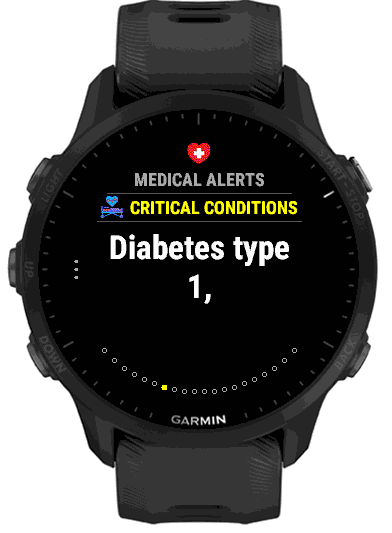
The list: 19 conditions
The list covers conditions where knowing in advance changes what a responder does next:
- Asthma
- Autism spectrum disorder
- Blood clotting disorder
- Cardiac arrhythmia
- COPD
- Dementia / Alzheimer’s
- Diabetes type 1
- Diabetes type 2
- Epilepsy / seizure disorder
- Heart disease
- High blood pressure
- Immunocompromised
- Kidney disease
- Multiple sclerosis
- On blood thinners (anticoagulants)
- Parkinson’s disease
- Pregnant
- Previous heart attack
- Previous stroke
Why this list is a draft
An allergy mistake can directly cause a reaction, so that list is checked against regulators. Conditions are more varied and personal, and there is no single official list of “conditions responders should know about” the way there is for major allergens. Rather than pretend otherwise, this list is offered honestly as a quick-pick convenience, not as something to rely on being complete.
Picking from the list, or typing your own
It works the same way as Critical Allergies. On the phone, turn on the switch beside each condition, and use Other conditions for the rest. On the watch, open Critical Conditions in Settings: Show first, then every condition with a tick box (ticked ones first), and last a box for anything else. Separate several typed conditions with commas.
On the card the conditions come after the allergies in Medical Alerts, under the heading Critical Conditions, and continue over extra pages when they are long.